
Think You Can Beat the Clock? The door closes. The timer starts. Suddenly, 60 minutes…
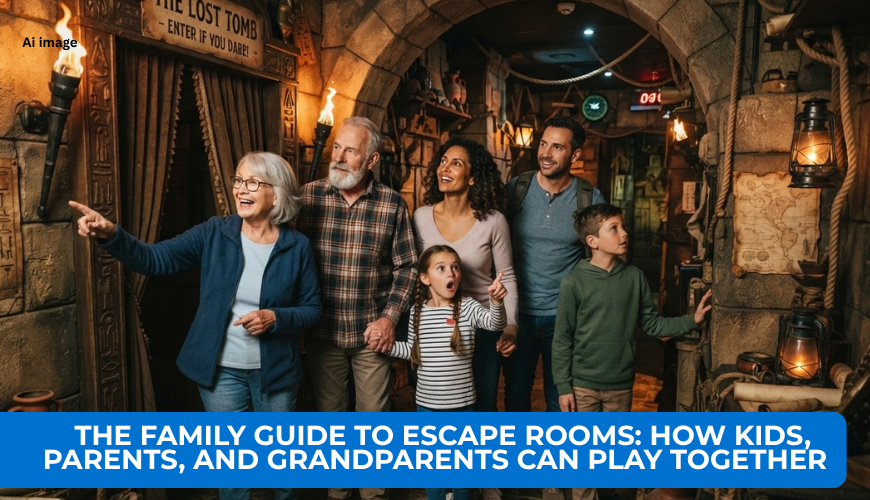
The Family Guide to Escape Rooms: How Kids, Parents, and Grandparents Can Play Together
A child spots a hidden detail, a parent connects two clues, and a grandparent recognises the pattern everyone else overlooked. Within minutes, three generations are solving a mystery together rather than staring at separate screens.
That shared experience is one reason escape rooms work so well as family activities. Success rarely depends on being the fastest, strongest or most experienced player. Instead, a family escape room rewards curiosity, communication, and the different ways people approach a problem.
After watching families tackle our games at Xscape Space, we have learned that mixed-age groups often perform better than they expect. This guide explains how children, parents, and grandparents can combine their strengths, choose an appropriate experience, and enjoy the adventure together.
Are escape rooms suitable for the whole family?
Escape rooms can be excellent multigenerational activities because everybody enters the story at the same time. Rather than dividing adults and children into separate entertainment, the experience gives the whole family a shared objective.
Suitability still depends on the game’s theme, difficulty, physical requirements, and recommended age range. Before booking, check whether the atmosphere might be frightening for younger children and whether every family member can comfortably participate.
Some children enjoy suspenseful stories, while others prefer light-hearted adventures. Similarly, one grandparent may relish a dark mystery, whereas another may be more comfortable in a brighter environment with fewer physical demands.
If you are uncertain, contact the venue before selecting a game. A knowledgeable team can explain the experience without spoiling its surprises and help you choose an option that fits your family.
Why do mixed-age families make effective escape room teams?
Different generations notice different things. Children frequently explore with fewer assumptions, adults tend to organise information, and grandparents may recognise familiar wordplay, objects or patterns.
From the game master’s perspective, this variety is valuable. We often watch adults develop an elaborate theory while a younger player points to the simple visual connection that unlocks the next step.
Older family members can offer patience and perspective when the timer creates pressure. Meanwhile, younger participants often bring energy, experimentation and a willingness to say unusual ideas aloud.
Consequently, the strongest family team is not necessarily the one with the oldest participants or the most experienced puzzle solvers. It is the group that listens to each person and treats every observation as potentially useful.
What can children contribute during an escape room?
Children are often excellent searchers. They look at lower shelves, notice colourful details and examine parts of the room that adults dismiss too quickly.
Their flexible thinking can also reveal unexpected connections. While grown-ups sometimes assume that a puzzle must involve complicated mathematics, a child may recognise that it simply asks players to match shapes, pictures or positions.
Give younger participants meaningful responsibilities instead of asking them to stand back while adults control every task. Depending on the game and the child’s age, they might:
- Search permitted areas for visible clues.
- Match colours, symbols or shapes.
- Keep unused keys together.
- Call out discoveries to the group.
- Remember parts of the story.
- Help arrange objects in an indicated order.
- Track which boxes or locks have already been opened.
Safety boundaries still matter. Adults should reinforce the briefing, supervise younger children and make sure nobody climbs, pulls fixtures or uses excessive force.
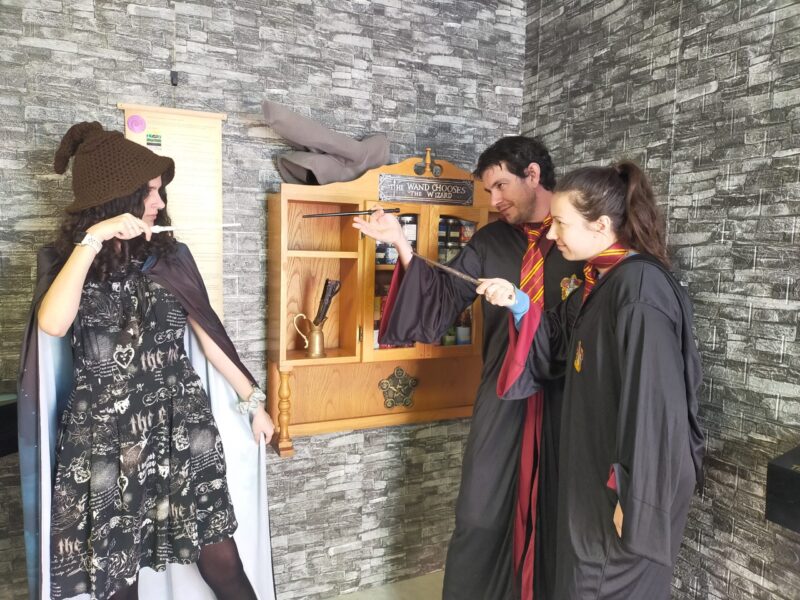
How can parents guide the family without taking over?
Naturally, parents want to keep the game moving and help their children succeed. However, solving every puzzle on a child’s behalf can turn a family experience into an adult activity with younger spectators.
Try asking guiding questions instead. “What do you notice?” “Where have we seen that symbol?” and “Which lock could use this clue?” encourage children to reason without immediately revealing the answer.
Parents can also manage the overall flow of information. If several clues have appeared at once, briefly summarise what remains unresolved and invite each family member to choose a task.
Meanwhile, resist the temptation to dismiss an idea because it sounds too simple. Escape room puzzles are designed to be understood, and a straightforward interpretation is often more useful than an elaborate one.
A helpful family leader creates opportunities rather than controlling every decision. Ideally, each participant should finish the game feeling that they contributed to the adventure.
What strengths do grandparents bring to escape room games?
Grandparents frequently bring patience, broad general knowledge, and experience with traditional puzzles. Crosswords, riddles, number sequences, mechanical objects, and word associations may all feel familiar.
In addition, older players are often good at slowing a rushed team down. A calm question such as “What information have we not used yet?” can stop the family from entering the same incorrect combination repeatedly.
Physical speed is not essential for most puzzle-solving tasks. A grandparent who prefers to remain in one part of the room can organise clues, study written information or coordinate discoveries from other family members.
Never assume that an older relative will struggle with an escape room. Likewise, do not assume they will enjoy every game style. Discuss the theme, accessibility, and expected atmosphere before booking so everyone can participate comfortably.
How should a family divide escape room tasks?
Start by spreading out within the permitted play area. Ask each person to search a different section, then announce anything that looks useful.
Once clues emerge, allow family members to gravitate towards tasks that suit them. A visual thinker might handle symbol matching, a confident reader can examine written clues, and a practical player may test keys or movable components.
Useful informal family roles include:
- Searcher: Checks allowed areas carefully for clues and objects.
- Organiser: Separates used items from unresolved materials.
- Communicator: Repeats discoveries so the entire team hears them.
- Connector: Looks for relationships between clues and locks.
- Checker: Verifies codes, sequences and completed steps.
- Timekeeper: Watches the clock without creating unnecessary panic.
Keep the roles flexible. If somebody becomes stuck or frustrated, swapping tasks can restore momentum and give another person a fresh perspective.
At Xscape Space, we often see the breakthrough arrive immediately after a clue changes hands. The new player has not necessarily understood more; they have simply approached the information without the first person’s assumptions.
How can families communicate better inside an escape room?
Good communication begins with short, specific updates. Saying “I found a key under the book” is more useful than quietly placing it on a table.
Encourage children and quieter relatives to speak before the loudest problem-solvers dominate the discussion. A quick round of “What has everyone found?” can uncover a crucial detail that has not reached the whole team.
Whenever possible, keep related clues visible and in a shared location. Avoid holding papers privately, putting keys in pockets or moving an important object without telling anyone.
Families should also distinguish between observations and theories. “These symbols appear in three places” is an observation; “I think they create a four-digit code” is a theory. Making that difference clear helps the group reconsider an interpretation without losing the useful facts behind it.
How do you stop adults from solving every puzzle?
One simple approach is to introduce a pause before adults answer. If a parent thinks they know the solution, they can ask whether the children want another moment to investigate.
Another option is to rotate who takes the lead. Let one family member explain the group’s reasoning, enter the next combination, or open the newly discovered compartment.
For younger players, break a larger challenge into manageable questions. Ask them to identify matching symbols first, then work together to decide what order those symbols should follow.
Importantly, adults should not pretend an incorrect answer is right. Children usually respond well to honest collaboration: “That did not open, so let’s check our order and try another idea.”
What should families do when someone feels frustrated?
Timed games can produce strong reactions, particularly when a promising idea does not work. Pause briefly and describe the problem without blaming a person: “This code has not opened the lock yet” is better than “You entered it wrong.”
Next, change the team’s focus. A frustrated player can search another area, organise used clues, or ask someone else to explain the puzzle from the beginning.
Praise useful behaviours rather than only correct answers. Careful searching, clear communication and respectful listening all contribute to progress, even when they do not produce an immediate solution.
Ultimately, the objective is a positive shared experience. Completing every puzzle matters less than making sure children, parents and grandparents feel included.
Should a family ask for escape room hints?
Yes. Hints are a normal part of an escape room, especially for a family group balancing different ages and experience levels.
Before asking, check whether the team has shared every discovery, searched the relevant area, and tried more than one interpretation. If progress has genuinely stopped, a well-timed hint protects the pace of the experience.
A good game master can usually offer a nudge rather than a complete answer. For example, the hint may direct the family towards an overlooked connection while leaving the satisfying final step for the players.
At Xscape Space, hints are intended to help teams continue enjoying the story. Spending a large part of the session repeating one unsuccessful approach rarely makes the eventual experience more rewarding.
How can you choose the right family escape room?
Begin with the ages, interests, and confidence levels of everyone attending. A good choice should be engaging for the children without making the theme uncomfortable for more cautious participants.
Ask the following questions before booking:
- Is the game’s theme suitable for younger players?
- Is an adult required to play or supervise?
- Does the experience contain darkness, sudden sounds, or suspense?
- Are there minimum-age or team-size requirements?
- How difficult is the game for first-time players?
- Are there mobility, lighting, or accessibility considerations?
- How does the hint system work?
- Can staff recommend a suitable game for a mixed-age group?
Recommended ages and supervision rules can vary between experiences. Therefore, always check the current game information rather than assuming every room has identical requirements.
Families looking for a shared indoor activity can explore Xscape Space’s escape rooms and interactive adventures in Nelson Tasman before choosing a game.
How should families prepare for their first escape room?
Arrive with enough time to settle in, use the facilities and listen carefully to the briefing. Rushing through the instructions can cause confusion about safety rules, game boundaries or the hint system.
Comfortable clothing and practical footwear are sensible choices. If anyone uses reading glasses or hearing support, make sure those items are available during the experience where permitted.
Before the game begins, agree on three team rules:
- Announce every useful discovery.
- Let everyone contribute before rejecting an idea.
- Ask for a hint if the group stops making progress.
Avoid researching solutions or spoilers. Discovering the room together is a major part of the fun, and prior answers can reduce the sense of achievement for the entire family.
Are escape rooms good for family celebrations and holidays?
An escape room can add a shared challenge to birthdays, reunions, school holidays and family visits. Unlike an activity where participants watch passively, everyone contributes to the same unfolding story.
The experience also creates natural conversation afterwards. Families often compare who noticed a hidden detail, which puzzle sparked the most debate, and how close they came to solving the final challenge.
For visitors planning a wider day in the region, the official Nelson Tasman visitor website offers information about local attractions, food and family activities.
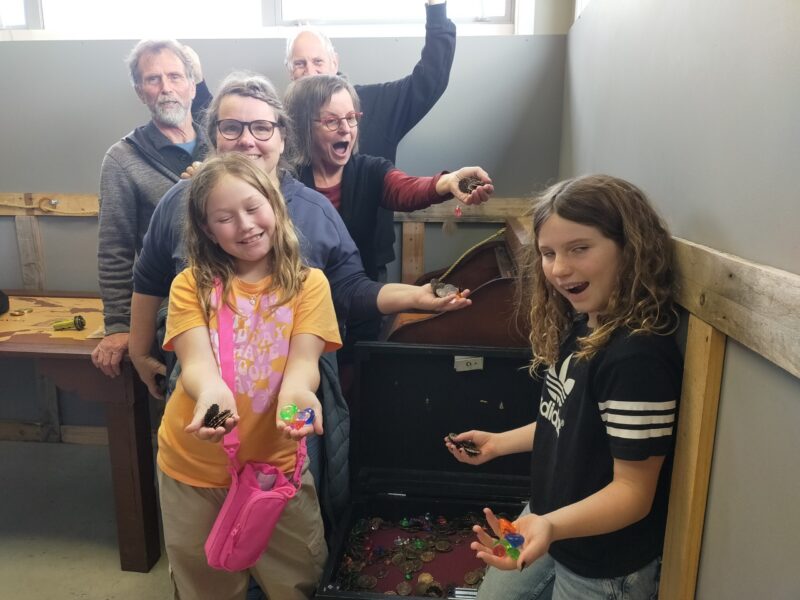
What family skills can an escape room help develop?
Escape room gameplay gives children opportunities to practise listening, explaining ideas and adapting after an unsuccessful attempt. Because the feedback is immediate, they can see how communication affects the whole group.
Adults also learn something about their own habits. Some discover that they give instructions too quickly, while others realise they have overlooked a quieter family member’s valuable observations.
Grandparents can share knowledge in a playful context rather than a formal teaching situation. At the same time, younger relatives may lead the family through visual or technology-based elements.
As a result, the experience creates genuine intergenerational teamwork. Each person can contribute knowledge while also learning from somebody of a different age.
What makes a successful multigenerational escape room team?
Successful family teams remain curious, organised and willing to listen. They divide tasks when several leads are available, then regroup when clues need to be combined.
They also give each person room to participate. A child’s observation should receive the same attention as an adult’s theory, while grandparents should be invited into the action rather than treated as spectators.
Most importantly, strong teams recover quickly from incorrect ideas. They test a theory, learn from the result and move on without turning a puzzle into an argument.
Escaping before the timer ends can be exciting, but it is not the only measure of success. A family that communicates well, shares a few laughs and leaves with a story to retell has already achieved something worthwhile.
Ready to plan a family escape room in Nelson Tasman?
Children bring curiosity, parents provide coordination, and grandparents contribute patience and experience. Combined, those strengths can turn a mixed-age group into an effective escape room team.
Choose a suitable theme, encourage every family member to participate and use hints before frustration takes over. With those foundations in place, the game becomes a shared adventure rather than a competition between generations.
Xscape Space offers immersive indoor escape rooms and other interactive adventures for groups in Richmond, Nelson Tasman. Review the current experiences, age guidance and availability, then book an Xscape Space family adventure when you find the right fit for your group.
BOOK AN ESCAPE SPACE FAMILY ADVENTURE
Family Escape Room FAQs for Beginners
Are escape rooms suitable for children, parents and grandparents?
Yes, many escape rooms suit multigenerational families because they reward observation, communication and different styles of thinking. Families should check each game’s theme, age guidance, accessibility and supervision requirements before booking.
What age can children do an escape room?
Age recommendations vary by venue and game. Consider the theme, puzzle difficulty, atmosphere, and whether an adult must play or supervise, then confirm the current requirements directly with the escape room provider.
Are escape rooms suitable for grandparents?
Adults can ask guiding questions, rotate leadership, and give children time to explain their ideas before providing an answer. Assigning meaningful tasks also helps younger participants remain actively involved.
What should I do when I find a clue in an escape room?
Escape rooms can be highly enjoyable for grandparents, particularly because puzzle solving does not usually depend on physical speed. Check mobility, lighting, sound, and accessibility details when choosing a game.
Should families ask for hints during an escape room?
Yes. A timely hint can prevent frustration and keep the story moving. Before requesting help, make sure the team has shared its clues, searched carefully, and tried more than one approach.
Related Posts

Comments (0)